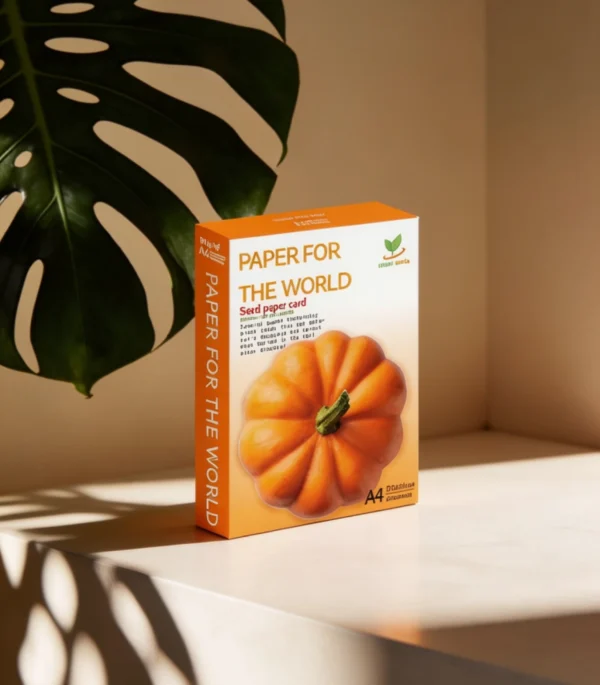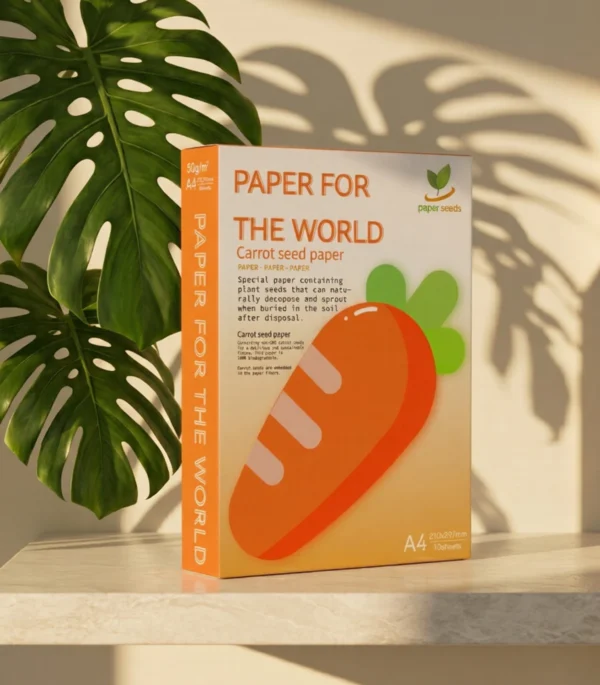
Seed paper begins as paper and continues as something that can grow. Instead of being discarded after use, the paper contains seeds embedded within its fibres. When planted under suitable conditions, the paper gradually breaks down in the soil while the seeds have an opportunity to germinate and develop into plants.
The idea is simple: use the paper first, then plant it. A card, tag, invitation, insert, or piece of packaging can carry a message during its first life and become part of a planting experience afterward.

What Is Seed Paper?
Seed paper is a plantable paper material made by combining paper fibres with seeds. The finished sheet can be cut, printed, folded, shaped, or converted into products such as cards, tags, invitations, packaging inserts, promotional pieces, and other paper goods.
Unlike conventional paper, seed paper is designed with a second stage of use in mind. After the printed item is no longer needed, it can be placed in soil, watered, and cared for like other seeds. The paper fibres soften and break down while moisture reaches the embedded seeds.
How Seed Paper Is Made
1. Paper fibres are prepared: suitable paper fibres are processed into a pulp that can be formed into new sheets. 2. Seeds are introduced: selected seeds are incorporated into the paper material using a process intended to preserve their ability to germinate. 3. Sheets are formed: the pulp and seed mixture is spread and formed into sheets with the required thickness and surface characteristics.
4. The paper is dried: moisture is removed while avoiding unnecessary conditions that could damage the seeds. 5. The sheets are converted: finished seed paper can then be cut, printed, die-cut, folded, punched, or converted into different paper products depending on the project.

How to Plant Seed Paper
1. Prepare the soil: choose a pot, planter, or suitable garden area and use moist, well-draining soil. 2. Place the paper: lay the seed paper on the soil. Large pieces may be torn into smaller sections before planting. 3. Cover lightly: add a thin layer of soil over the paper rather than burying it too deeply.
4. Keep it moist: water gently and keep the soil consistently moist during the early germination stage without leaving it permanently waterlogged. 5. Provide suitable growing conditions: place the planted paper where the selected seed variety can receive an appropriate amount of light, warmth, and airflow.
Seed paper is plantable, but germination is a biological process rather than a guaranteed mechanical result. Seed variety, climate, season, soil, water, light, storage conditions, and planting method can all affect the outcome.

What Happens After Planting?
After watering, the paper begins absorbing moisture and softening in the soil. This helps expose the embedded seeds to the moisture and growing environment around them. If conditions are suitable for the particular seed variety, germination can begin and seedlings may gradually emerge through the soil.
There is no single germination time that applies to every seed paper product. Different seed varieties behave differently, and environmental conditions can significantly change the result. For this reason, planting instructions should always be matched to the seeds contained in the specific paper rather than treated as a universal formula.
Printing and Customization
Seed paper can be turned into practical printed products while retaining its plantable function. Depending on the paper specification and project requirements, it can be used for logos, typography, illustrations, planting instructions, QR codes, brand messages, event information, product details, and other printed content.
The design should account for the natural texture of seed paper. It may behave differently from smooth coated commercial stock, so fine details, very small text, dense colour coverage, finishing methods, and print processes should be evaluated according to the exact paper being used. For custom projects, artwork and production requirements should be reviewed before final manufacturing.

Where Seed Paper Works Best
Seed paper is especially useful for printed items that would normally have a short functional life. Business cards can become a planting experience after a meeting. Wedding invitations and save-the-date cards can become keepsakes. Product tags can continue to engage customers after the product has been unpacked. Packaging inserts, thank-you cards, event materials, promotional pieces, and corporate gifts can all use the same principle.
The strongest applications are usually those in which planting is relevant to the message rather than added only as decoration. A well-designed seed paper product explains what the material is, tells the recipient what to do with it, and makes the transition from printed object to planted object easy to understand.
Before You Choose Seed Paper
Start with the final use rather than the paper alone. Consider where the finished product will be distributed, who will receive it, how much information needs to be printed, how the piece will be stored, and where recipients are expected to plant it. These factors influence the most appropriate paper thickness, size, seed variety, print method, finishing process, and planting instructions.
Seed selection also matters when products are intended for different countries or regions. Climate, planting season, local growing conditions, and applicable import or agricultural restrictions may affect which seed varieties are appropriate for a particular project or destination.
A successful seed paper project is not simply paper with seeds inside it. The material, seed variety, printing, product design, planting instructions, distribution environment, and intended planting location all need to work together.
Explore Plantable Paper Products
Explore seed paper, cards, tags, labels, packaging, and other plantable paper products for branding, events, gifting, retail, and custom projects.